Conventional Manual RCT
Traditional hand files
Conventional manual root canal treatment is the time-tested standard of endodontic therapy. It uses graded stainless-steel hand files operated manually by the dentist. While it takes more time and manual effort, this classic technique offers unmatched tactile feedback, letting the dentist feel the canal walls and navigate blockages or calcified canals with extreme control.
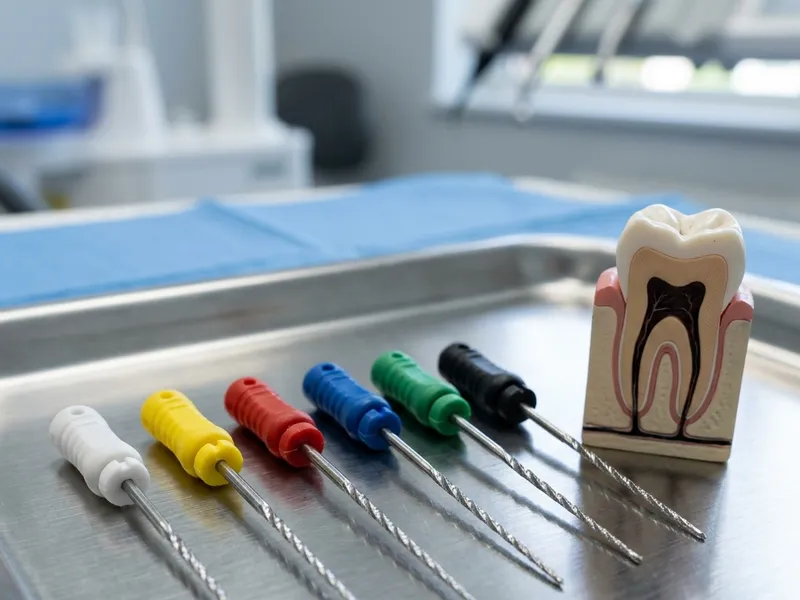
Tactile mastery & controlled care
Even when using manual files, our specialists combine them with high-magnification loupes and digital diagnostic X-rays, so the traditional procedure is performed with modern accuracy and care.
High tactile feedback
Lets the dentist manually feel calcified blockages or canal curves.
Conservative cost
A budget-friendly option that still removes infection and saves the tooth.
Indispensable for blockages
Essential for negotiating stiff, calcified canals where rotary files might bind.
Who is it for?
- Straightforward root canal cases with simple anatomy
- Teeth with calcified (blocked) canals that require manual negotiation
- Patients seeking a reliable, cost-effective treatment option
- Teeth with severe obstructions where automated files cannot navigate
What to expect
The tooth is numbed using standard anaesthesia, making the treatment completely painless. You will feel the dentist working inside the tooth with fine hand files. Because the cleaning is done manually, you will need to keep your mouth open a little longer.
Performed at Shwetha Dentistry by our specialist endodontic team.
The Procedure, Step by Step
Exactly what happens during your conventional manual rct — no surprises.
Numbing & Isolation
Numbing & Isolation
Administering anaesthesia and isolating the tooth with a rubber dam.
Local anaesthesia is administered to ensure complete comfort. The tooth is then isolated using a sterile rubber dam, protecting it from saliva and keeping the treatment field clean.
This ensures a sterile environment and a comfortable experience for the patient.
Manual Location
Manual Location
Using fine hand files to locate and explore the root canals.
The dentist creates an access cavity and uses fine, flexible hand files to locate the canal openings, feeling the shape, length and resistance of the canals directly.
This manual exploration provides direct tactile feedback about the internal anatomy.
Step-Back Shaping
Step-Back Shaping
Using progressive sizes of hand files to clean and shape the canals.
Using a step-back filing sequence, the dentist manually cleans and shapes the canals from the top down, widening them progressively so the filling materials will fit.
Manual cleaning allows controlled shaping of the canal walls.
Disinfectant Rinsing
Disinfectant Rinsing
Flushing the canals with sanitising solutions to clear debris.
Throughout the manual filing, the canals are frequently flushed with sanitising solutions to remove loose debris, disinfect the walls and kill bacteria.
Frequent rinsing keeps the canals clean and clears out shaped dentine shavings.
Lateral Condensation Seal
Lateral Condensation Seal
Sealing the canals using gutta-percha and sealer under manual pressure.
The canals are dried and filled with gutta-percha cones. A manual spreader instrument packs the cones tightly against the canal walls with sealer, creating a tight seal.
Manual packing ensures the canals are filled and sealed completely.
Treatment Cost
₹3,000 – ₹4,500
1–2 visits (60 minutes per visit)
Indicative range — please consult the dentist; the exact price varies from case to case.
Aftercare
- Avoid chewing on the treated side until the permanent restoration is completed.
- Maintain standard oral hygiene with gentle flossing.
- Take over-the-counter anti-inflammatory medication if you experience minor soreness.
- If the temporary filling falls out before your next visit, contact us to replace it.
Frequently Asked Questions
Yes. Because the cleaning and shaping are done manually file-by-file, it typically takes 60 to 75 minutes, and complex cases may require two visits.
No. The anaesthesia used is exactly the same as in advanced treatments. The tooth is completely numb, so the procedure itself is painless.
When canals are extremely narrow, calcified (blocked by calcium deposits) or have sharp bends where automated motors might place too much stress on the file.
When performed by an experienced endodontist, manual RCT is highly reliable, with success rates exceeding 90% in standard cases.
Yes — if the case is straightforward with no active infection, it can be completed in a single visit, though two visits are common.
Manual files are made of high-grade stainless steel or carbon steel, providing excellent stiffness and tactile feedback to negotiate calcified blockages.
It does not require specialised automated motors or single-use rotary files, keeping equipment costs lower and making it more affordable.
Some mild sensitivity is normal for 2 to 3 days as the surrounding bone and ligament heal. It is easily managed with standard pain relievers.
Yes. Unlike rotary motors or electronic apex locators, manual files are completely mechanical and safe.
Avoid chewing on the treated tooth until it is crowned, to prevent fracture while the tooth structure is weakened.